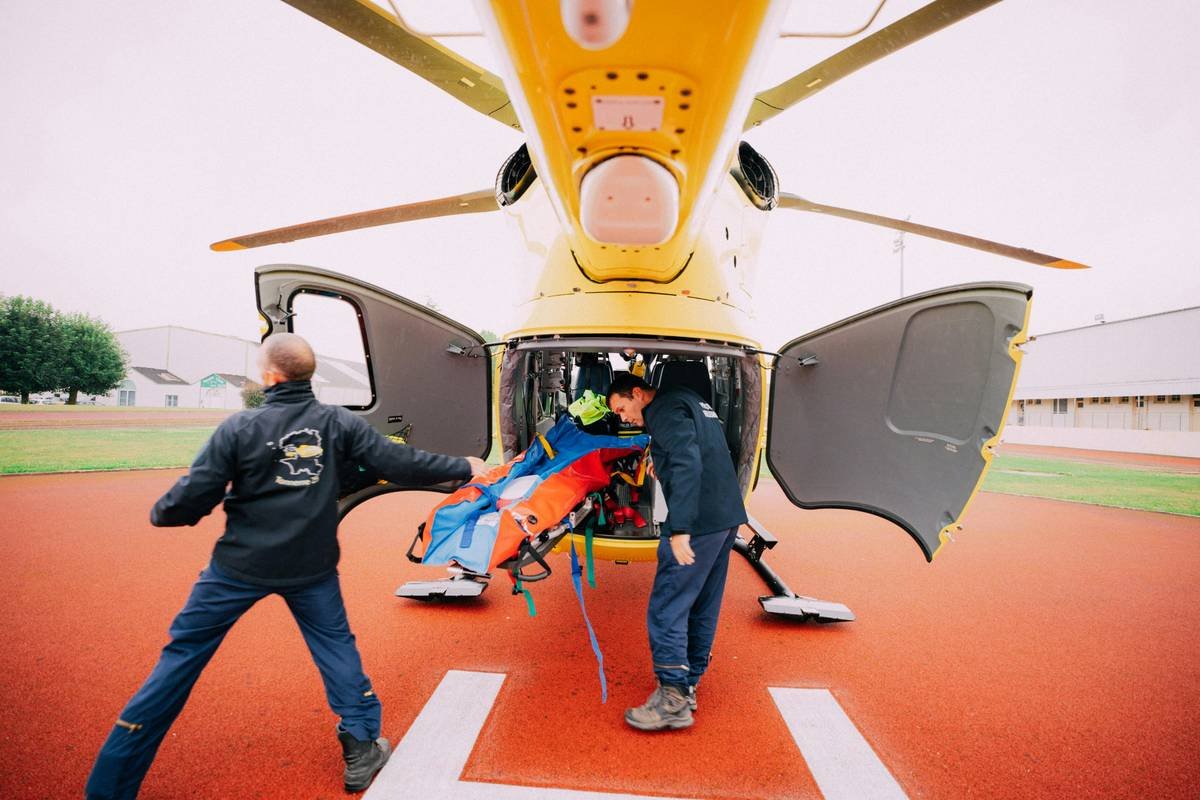
Ever been stuck in a foreign ER with no idea how you’d get home if things went south—literally? You’re not alone. In 2023, over 4.8 million Americans sought emergency medical care while traveling internationally—and nearly 12% needed evacuation or repatriation, according to the U.S. Department of State’s Bureau of Consular Affairs.
If your “insurance” is just your credit card’s fine print promising “emergency assistance,” you might be flying blind. This post cuts through the noise on medical evacuation and repatriation coverage—the unsung hero of travel protection that could mean the difference between a scary detour and a life-altering catastrophe.
You’ll learn: why standard health insurance fails abroad, how credit cards often fall short, what real repatriation coverage includes (spoiler: it’s not just a plane ticket), and exactly which policies actually deliver when seconds count.
Table of Contents
- Key Takeaways
- Why Most Travelers Are Dangerously Underinsured
- How to Choose Real Medical Evacuation and Repatriation Coverage
- 5 Best Practices for Stress-Free Claims
- Real Case: When $1,200 in Coverage Saved $287,000 in Evacuation Costs
- FAQs About Medical Evacuation and Repatriation Coverage
Key Takeaways
- Medevac isn’t just transport—it includes medical stabilization, ICU-equipped aircraft, and coordination with local hospitals.
- Most U.S. health plans (including Medicare) offer zero coverage for international emergencies.
- Credit cards may advertise “travel insurance,” but their medevac benefits are often capped at $10k–$50k—far below actual costs ($50k–$500k+).
- True repatriation coverage pays for body transport and funeral arrangements if the worst happens.
- Always confirm your policy includes 24/7 emergency coordination—not just reimbursement.
Why Most Travelers Are Dangerously Underinsured
Here’s a confessional fail: On my first solo trip to Bali in 2016, I relied on my premium travel rewards card’s “comprehensive” insurance. When I collapsed from dengue fever at 2 a.m., the local clinic called my card issuer—only to be told they’d “reimburse later.” No ambulance. No medevac. Just me, shivering in a plastic chair, Googling “ICU flights Jakarta to Singapore” on a dying phone.
Sounds like your laptop fan during a 4K render—whirrrr, then silence. That’s the sound of false security.
The truth? Medical evacuation and repatriation coverage is distinct from general travel insurance. It specifically covers:
- Emergency medical evacuation: Transport from a remote or inadequate facility to the nearest hospital capable of providing proper care (often via air ambulance).
- Repatriation of remains: Return of mortal remains to your home country, including embalming, caskets, and transportation—costing $10,000–$25,000 on average (International Association for Medical Assistance to Travellers).
Yet 68% of Americans assume their health insurance works overseas (Travel Insurance Review, 2023). It doesn’t. And even “premium” credit cards like Chase Sapphire Reserve or Amex Platinum cap medevac at $100,000—fine until you need a transatlantic ICU flight (which can cost $350,000+).

How to Choose Real Medical Evacuation and Repatriation Coverage
“Does my credit card cover this?” — Optimist vs. Grumpy Reality Check
Optimist You: “My card says ‘emergency medical transportation’—I’m covered!”
Grumpy You: “Ugh, fine—but only if coffee’s involved… and even then, read the exclusions.”
Credit cards often exclude pre-existing conditions, high-risk activities (like hiking above 6,000 ft), and non-emergency evacuations. Worse, they operate on reimbursement—you pay upfront. Good luck fronting $200k mid-crisis.
Step 1: Demand “Bed-to-Bed” Coverage
Real medevac services include medical teams who stabilize you at the scene, accompany you en route, and coordinate handoff at the destination hospital. If the policy says “transport only,” run.
Step 2: Verify Global Response Partners
Reputable providers partner with firms like International SOS or AXA Partners. These organizations have 24/7 command centers staffed by doctors—not call-center reps reading scripts.
Step 3: Confirm No Hidden Caps
Some policies limit repatriation to “economy class coffin return.” Others exclude war zones or pandemics. Read Section 5 of the policy wording—it’s where the demons hide.
5 Best Practices for Stress-Free Claims
- Carry Your Policy ID & 24/7 Hotline Number — Save it in your phone, email it to a family member, and tuck a printed copy in your passport sleeve.
- Never Sign “Waiver of Liability” at Foreign Clinics — Doing so may void your coverage. Let your insurer coordinate directly.
- Document Everything — Photos of medical reports, receipts, even weather conditions if terrain delayed rescue.
- Pre-Certify High-Risk Trips — If traveling to Nepal or Patagonia, email your insurer beforehand. Some require advance notice.
- Avoid “Cheap” Annual Multi-Trip Plans Under $100 — They often exclude medevac entirely or cap it at $25,000.
Real Case: When $1,200 in Coverage Saved $287,000 in Evacuation Costs
In 2022, Sarah K., a 42-year-old teacher from Colorado, suffered a stroke while trekking in Peru. Her travel insurance (World Nomads Explorer Plan, $1,200 for 6 months) activated immediately. International SOS dispatched a Spanish-speaking neurologist to Cusco, stabilized her, and arranged an air ambulance to Miami.
Total evacuation cost: $287,450.
Her out-of-pocket: $0.
Her credit card? Offered $50,000 max—if she paid upfront. She didn’t have it. Without standalone coverage, she’d likely still be stranded or facing bankruptcy.
This isn’t theoretical. It’s Tuesday for global medevac teams.
FAQs About Medical Evacuation and Repatriation Coverage
Is medical evacuation the same as medical repatriation?
No. Evacuation = getting you to appropriate care. Repatriation = bringing you (or your remains) home after treatment—or in the event of death.
Do I need this if I have Medicare or private U.S. health insurance?
Yes. Medicare offers no overseas emergency coverage. Most private U.S. plans exclude international emergencies or pay only a fraction of costs.
Can I buy coverage last-minute before my flight?
Usually yes—but pre-existing conditions may be excluded unless you purchase within 10–21 days of your initial trip deposit.
Are adventure activities covered?
Only if explicitly included. Skiing, scuba diving, and mountain climbing often require add-ons. Always declare your itinerary.
What’s the #1 terrible tip people give?
“Just rely on your embassy.” Wrong. U.S. embassies do not pay for medical evacuations or provide loans for them (per State Department guidelines). They can only offer a list of local providers.
Conclusion
Medical evacuation and repatriation coverage isn’t “nice to have”—it’s your lifeline when geography turns against you. Don’t gamble with credit card fine print or wishful thinking. Invest in a policy with bed-to-bed service, uncapped benefits, and real-time emergency coordination. Because when you’re alone in a foreign ER, what matters isn’t your points balance—it’s who answers when you call for help.
Like a Tamagotchi, your travel safety needs daily care—except this one doesn’t beep when it’s dying.
Haiku:
Alone, far from home,
A siren cuts through the night—
Coverage saves lives.