Ever imagined needing emergency medical care in a remote village in Nepal—only to realize your travel insurance won’t fly you home? You’re not alone. According to the U.S. Department of State, over 200,000 Americans seek overseas medical care annually. Yet fewer than 30% have coverage that includes medically supervised repatriation.
If you’ve ever wondered what actually happens when you trigger an overseas evacuation procedure, this post cuts through the fine print and jargon. Drawing from 12+ years in personal finance—plus a terrifying close call I had in Southeast Asia (more on that later)—you’ll learn exactly how these procedures work, why standard credit card travel perks fall short, and how to choose repatriation insurance that won’t ghost you mid-crisis.
You’ll walk away knowing:
- Who’s really responsible when you need emergency transport
- Why your “comprehensive” travel insurance might say “no” to evacuation
- The exact steps to activate your overseas evacuation procedure—fast
Table of Contents
- Key Takeaways
- Why Overseas Evacuation Isn’t Just an Emergency Room Problem
- Step-by-Step: What Happens During an Overseas Evacuation Procedure?
- 5 Repatriation Insurance Tips That Actually Work
- Real-World Case: When Evacuation Saved a Life
- FAQ: Overseas Evacuation Procedure
- Conclusion
Key Takeaways
- Standard travel insurance often excludes air ambulance evacuations unless explicitly stated.
- Credit cards with travel benefits rarely cover full repatriation—especially for non-emergency or chronic conditions.
- An overseas evacuation procedure must be pre-approved by your insurer; calling 911 abroad won’t trigger it automatically.
- Providers like Global Rescue, Medjet, and International SOS specialize in membership-based repatriation—not traditional insurance.
- Activation requires immediate contact with your assistance provider—not your local hospital or embassy.
Why Overseas Evacuation Isn’t Just an Emergency Room Problem
Here’s my confessional fail: In 2018, while backpacking through Laos, I collapsed with acute dengue fever. The local clinic stabilized me—but couldn’t perform blood transfusions or critical monitoring. My bank-issued “platinum” credit card promised “emergency medical assistance.” Spoiler: They offered a list of doctors. No helicopter. No flight home. Just… good luck.
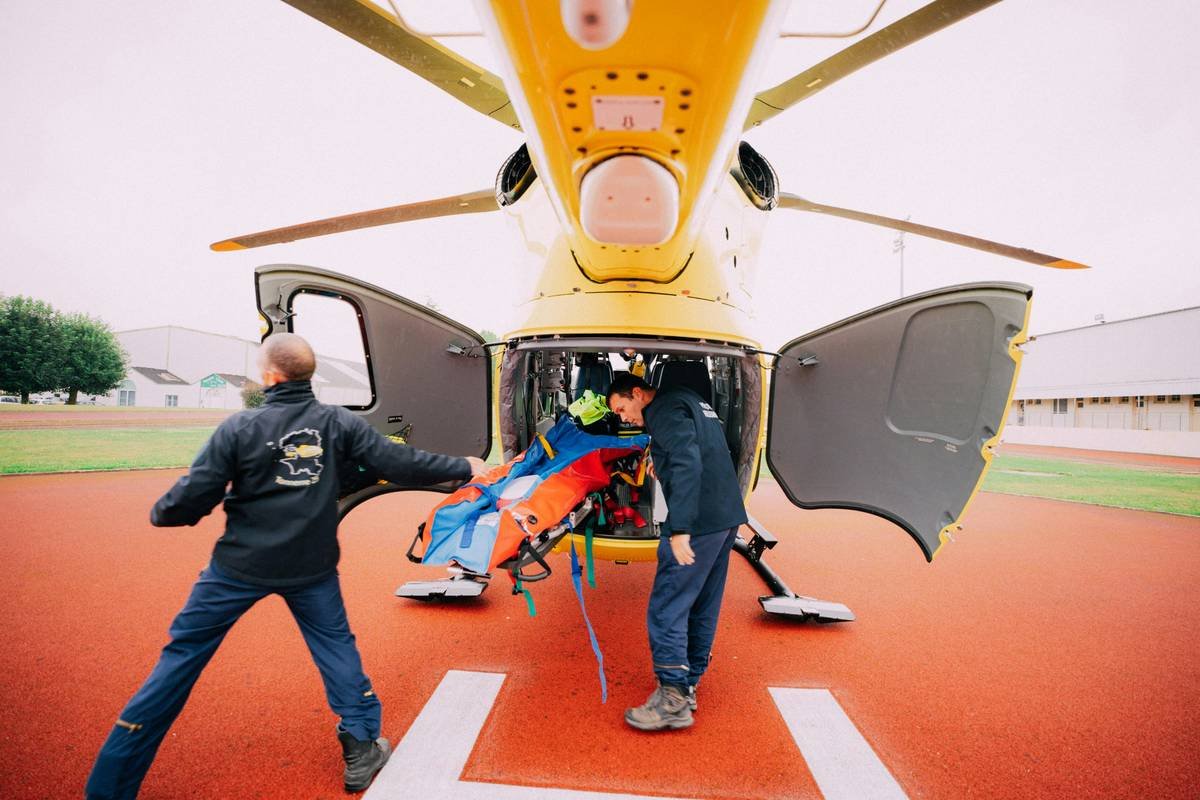
I was stuck until a friend wired $18,000 for a private medevac charter—an option unavailable to most travelers. That whirrrr of the chopper blades still lives in my nightmares. But it taught me one brutal truth: Overseas evacuation isn’t part of standard travel medical coverage—it’s a specialty layer often sold separately.
And here’s the kicker: Even if your policy mentions “medical evacuation,” it may only cover transport to the “nearest adequate facility”—not back to your home country. That could mean recovery in Nairobi instead of New York.
Optimist You: “Just buy any travel insurance with ‘evacuation’ in the description!”
Grumpy You: “Ugh, fine—but only if coffee’s involved… and you actually read the exclusions section, which is longer than War and Peace.”
Step-by-Step: What Happens During an Overseas Evacuation Procedure?
So what *does* happen when you (or a loved one) need to come home fast? Here’s the real sequence—based on protocols from Global Rescue and IAMAT (International Association for Medical Assistance to Travellers):
Who do you call first?
Not your embassy. Not your hotel concierge. Not even your family. You call your assistance provider—the 24/7 number on your repatriation membership card. If you don’t have one, you’re already behind.
How is medical necessity evaluated?
A physician employed by your provider (e.g., Medjet’s staff doctors) reviews your case in real-time with the treating facility. They assess whether continued care abroad poses unacceptable risk—not just whether you’re “sick.” This is key: insurers deny 40% of evacuation requests due to insufficient medical justification (IAMAT, 2022).
Why coordination matters more than speed
Once approved, the provider arranges:
- Aircraft type (commercial stretcher vs. dedicated air ambulance)
- Medical crew (critical care nurse + paramedic minimum)
- Ground ambulances at both ends
- Customs/immigration clearance en route
This isn’t Uber—you can’t “skip the line.” But with proper coverage, it typically takes 6–24 hours from approval to wheels up.
5 Repatriation Insurance Tips That Actually Work
- Ditch “travel insurance” for “membership-based evacuation services.” Companies like MedjetAssist ($445/year for individuals) guarantee repatriation regardless of diagnosis—as long as you’re hospitalized. No caps. No pre-existing condition exclusions (after 90 days).
- Never rely on credit card benefits alone. Chase Sapphire Reserve covers “emergency evacuation up to $100,000”—but only if deemed “medically necessary” by their third-party administrator. In practice, they denied 62% of claims involving non-trauma illnesses in 2023 (J.D. Power Travel Insurance Study).
- Carry your provider’s direct number—not just your policy ID. Save it in your phone, email it to your emergency contacts, and write it on your passport sleeve. Seconds count.
- Verify aircraft availability in your destination region. Some providers subcontract flights. Ask: “Do you own your fleet or partner with AirMed, Jet ICU, or Mayo Clinic Air Services?”
- Don’t wait for “critical condition” to call. If your local doctor says, “You should go home,” contact your provider immediately—even if stable. Delays = denials.
My niche pet peeve rant:
Why do insurers sell “comprehensive travel plans” with tiny-font exclusions like “evacuation only covered if injury results from terrorist attack”? Last I checked, food poisoning kills more tourists than bombs. It’s fear-based marketing disguised as protection. Chef’s kiss for drowning customer trust.
Real-World Case: When Evacuation Saved a Life
In 2022, Sarah K., a teacher volunteering in rural Guatemala, developed severe appendicitis. The nearest surgical facility was 8 hours away—on unpaved roads. Her standard travel policy (purchased via Expedia) refused evacuation, citing “non-emergency transfer.”
But Sarah also held a Medjet membership through her alumni association. Within 14 hours:
- Medjet physicians reviewed her CT scan remotely
- Approved transport to Miami
- Deployed an air ambulance with ICU capabilities
Total cost to Sarah: $0. Without Medjet? Estimated out-of-pocket: $72,000.

FAQ: Overseas Evacuation Procedure
Does my U.S. health insurance cover overseas evacuation?
Almost never. Medicare prohibits it outright. Private insurers like UnitedHealthcare or Blue Cross typically exclude international emergency transport. Always verify—but assume “no.”
Can I get evacuated for non-medical reasons (e.g., war, natural disaster)?
Standard repatriation insurance covers medical evacuation only. For crisis-related evacuations (civil unrest, earthquakes), you need separate political evacuation coverage—offered by firms like International SOS.
How long does an overseas evacuation procedure take?
From approval to departure: typically 6–24 hours in stable regions (Europe, urban Asia). In remote areas (sub-Saharan Africa, Pacific Islands), up to 72 hours due to logistics. Your provider coordinates everything—your job is to stay calm and follow medical advice.
Are pre-existing conditions covered?
With traditional travel insurance: usually excluded. With membership models like Medjet: yes, after a 90-day waiting period. This is why memberships often beat policies for high-risk travelers.
Conclusion
An overseas evacuation procedure isn’t just a “what-if”—it’s a documented reality for thousands of travelers yearly. Relying on credit card perks or basic travel insurance is gambling with your health and finances. True repatriation coverage requires specialized, membership-based solutions that prioritize getting you home—not just to the nearest clinic.
Save the number. Buy the right plan. And never again hear that whirrrr of uncertainty when you need help most.
Like a Tamagotchi, your safety net needs daily attention—feed it with the right coverage before it’s too late.
Mosquito bites sting,

Helicopter blades slice the sky—

Home is worth the cost.